A Complete Guide to PE (Polyethylene) Packaging Material: LDPE vs HDPE, Properties, Pros & Cons
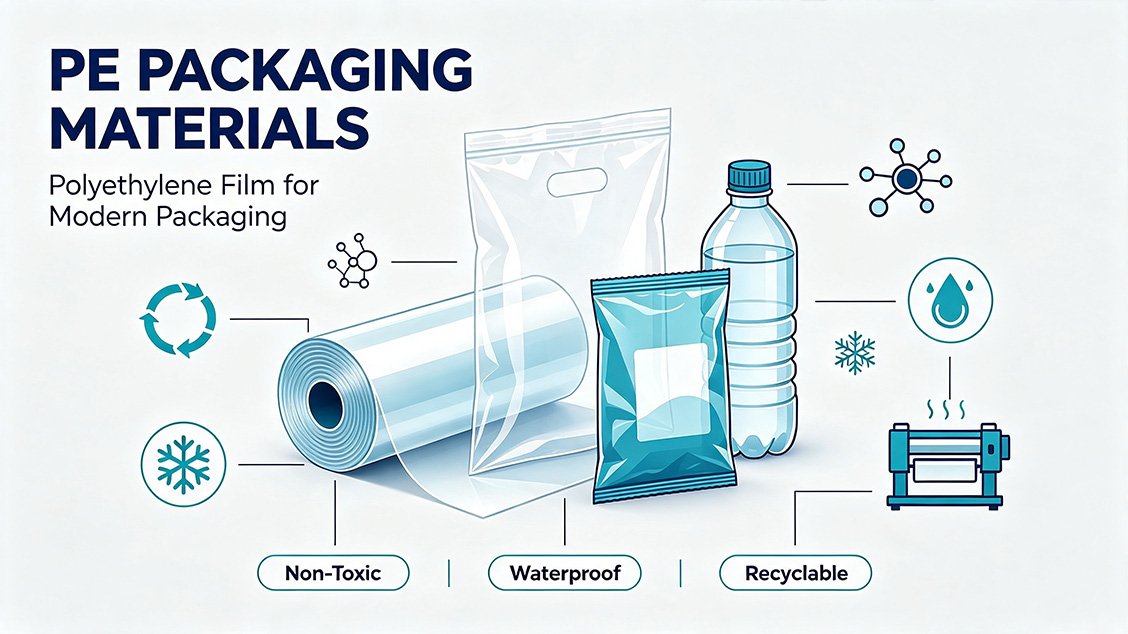
PE (Polyethylene) is a thermoplastic resin polymerized from ethylene monomers. It is the highest-yield and most widely used plastic packaging substrate in the world. With outstanding features including non-toxicity, high cost performance, excellent toughness and easy processing, PE materials are extensively applied in food packaging, industrial packaging, daily commodity packaging and other fields, serving as the core basic material in the global packaging industry.
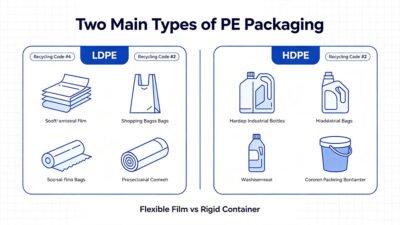
Commercial PE packaging materials are mainly divided into two categories: LDPE (Low-Density Polyethylene) and HDPE (High-Density Polyethylene). They differ greatly in density, texture, physical properties and application scenarios. The detailed introduction is as follows.
1. Classification & Core Properties of Mainstream PE Packaging Materials
1.1 LDPE (Low-Density Polyethylene)
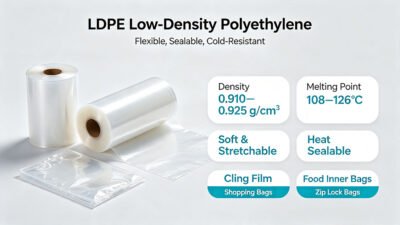
Basic Parameters: Density: 0.910–0.925g/cm³, Melting point: 108–126℃
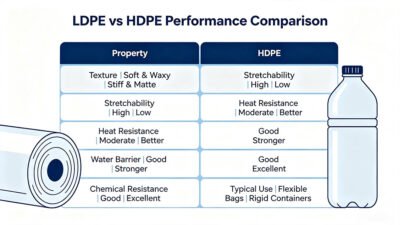
Visual Texture: The film is translucent milky white with soft and mild luster. Thick LDPE presents a waxy matte white appearance without harsh gloss.
Hand Feel & Physical Performance: It features a smooth, waxy and warm hand feel. The rubbing sound is soft and non-irritating. With superior ductility and stretchability, it can be elongated evenly without breaking, and no hard creases will remain after folding.
Core Advantages: Excellent heat sealing performance, superior waterproof and moisture-proof capacity, and extreme low-temperature resistance (no cracking at -70℃). It is food-safe with no harmful substance precipitation.
Common Applications: Food cling film, supermarket shopping bags, food inner packaging bags, zip lock bags, heat-sealing layers of composite films, and lightweight daily shopping bags.
1.2 HDPE (High-Density Polyethylene)
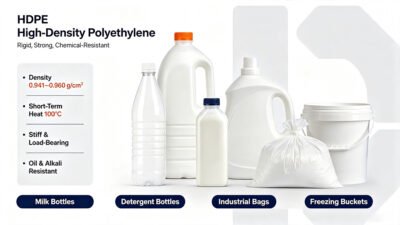
Basic Parameters: Density: 0.941–0.960g/cm³. It has higher rigidity and better heat resistance than LDPE, which can withstand a short-term high temperature of 100℃.
Visual Texture: Mostly opaque milky white with an overall matte finish. HDPE films are stiff, and blown bottles or injection-molded products are thick, three-dimensional and not easy to deform.
Hand Feel & Physical Performance: The texture is firm and stiff with good compression resilience. It makes a clear and crisp sound when rubbed. Slight white marks will appear after bending. It has poor stretchability and is not prone to large deformation, with excellent structural stability and load-bearing capacity.
Core Advantages: High hardness, great oil resistance, acid and alkali chemical corrosion resistance. It has better water vapor barrier performance and stronger load-bearing capacity than LDPE.
Common Applications: Milk bottles, laundry detergent & dish soap plastic bottles, heavy-duty industrial packaging bags, high-strength garbage bags, frozen hard packaging barrels, and heavy-duty moisture-proof packaging products.
2. General Pros & Cons of PE Packaging Materials
2.1 Core Advantages
-
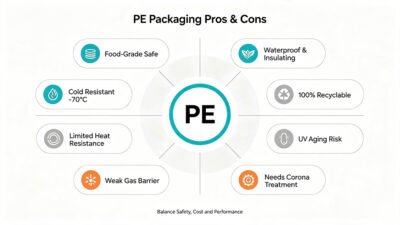
Food-grade Safety & Non-toxic: Stable material structure with no harmful chemical precipitation. It can be directly in contact with fresh food, cooked food, snacks and other daily foods, complying with global food packaging safety standards.
-
Weather & Chemical Resistance: Resistant to acid, alkali, salt water and weak solvents. It is completely water-absorbent-free with excellent moisture and waterproof barrier performance, suitable for damp and slightly corrosive goods packaging.
-
Superior Low-temperature Resistance: Maintains good toughness without cracking or deformation at -70℃, making it the standard material for cold chain and frozen product packaging.
-
Easy Processing & High Cost Performance: Adaptable to multiple processing technologies including film blowing, injection molding, blow molding and bag making. It supports mass production with low manufacturing costs.
-
100% Recyclable & Eco-friendly: It can be remelted and recycled completely. The mature global PE recycling system reduces packaging costs and environmental pressure.
-
Waterproof & Insulating: Fully waterproof and impermeable with good insulation properties, ideal for encapsulating liquid goods, damp products and ordinary electronic accessories.
2.2 Disadvantages
-
Poor Heat Resistance: The long-term service temperature of ordinary PE is ≤80℃. It cannot hold boiling water or be heated in a microwave oven, and will soften and deform under high temperature.
-
Weak Gas Barrier Performance: The material is breathable and permeable to oxygen and peculiar smells. It cannot realize long-term fragrance locking and oxygen barrier fresh-keeping, not suitable for long-term sealed storage of dry goods, spices and precision products.
-
Poor UV Aging Resistance: Long-term exposure to sunlight will cause oxidation, resulting in brittleness, cracking and fading. UV-resistant additives are required for outdoor packaging applications.
-
Difficult Printing & Bonding: PE has an inert molecular structure with low surface adhesion. Direct printing or bonding is easy to fall off. Corona surface treatment is mandatory before printing and lamination processing.