


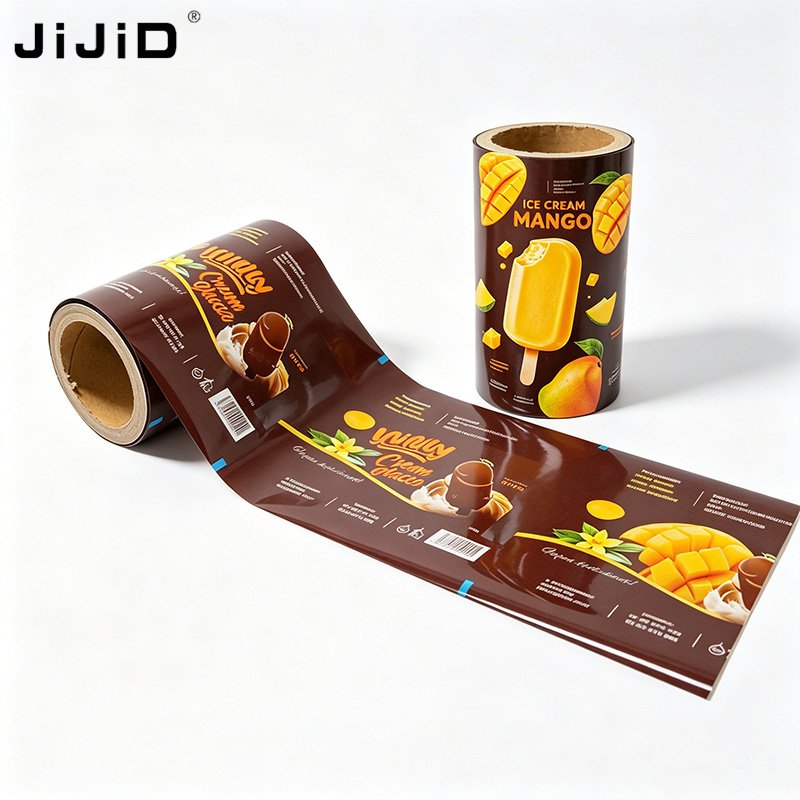
Registration accuracy is a critical quality indicator in flexible packaging printing. In practice, many factors can affect registration precision. These can be grouped into six categories: equipment, film materials, чернила & process, pre‑press & plate making, среда, and operation.

1. Equipment Factors
- Mechanical precision – Insufficient precision in print cylinder diameter tolerance, concentricity, dynamic balance, taper, or keyway specifications leads to irregular cylinder rotation and directly affects registration.
- Drive system – Mechanical shaft drives rely on main shaft stability, while electronic shaft drives require strict synchronization of servo motors on each color group. Any instability or inaccurate phase adjustment causes registration errors.
- Registration control system – The position, angle, and cleanliness of the photoelectric scanner, plus the response speed and accuracy of the lateral/longitudinal register adjustment mechanisms, directly influence error detection and correction.
- Tension control – Mismatched tension among unwinding, printing units, and rewinding results in:
- Excessive tension → film stretched longitudinally, register shift;
- Insufficient tension → film slack and wandering, unstable both longitudinally and laterally;
- Slow‑responding dancer roller or unstable air pressure → tension fluctuations.
- Idler rollers and nip rollers – Non‑parallel idlers, worn bearings, or uneven nip pressure cause lateral web wandering. Worn gears or shaft bushes create lag‑type register errors during acceleration/deceleration.
2. Film Material Characteristics
- Tensile properties – Different films have varying elastic modulus and tensile strength, thus different sensitivity to tension changes. Improper or fluctuating tension stretches or shrinks the film, altering the registration position.
- Thermal shrinkage – In the drying oven, if a film has high thermal shrinkage and temperature/duration are poorly controlled, film shrinkage deformation significantly affects registration.
- Thickness uniformity – Films with large thickness tolerance experience inconsistent stretch along the web, causing wandering and registration drift.
- Web defects – Wavy edges, curled edges, or out‑of‑round rolls lead to lateral oscillation and cross‑directional misregistration.
3. Ink and Printing Process
- Ink viscosity – Too high or too low viscosity affects ink transfer and drying speed, potentially causing uneven ink distribution on the plate or film deformation during drying, both harming registration.
- Doctor blade settings – Excessive or insufficient blade pressure, or improper blade contact position, leads to poor ink doctoring and unstable ink transfer, degrading register accuracy.
- Printing speed – At high speeds, film stress changes rapidly and registration errors accumulate more easily, requiring tighter tension control and faster register response.
4. Pre‑press and Plate Making
- Pattern complexity – More colors, complex overprints, fine lines or small text increase registration difficulty and the risk of misregistration.
- Registration mark (cursor) дизайн – Marks that are too light, poorly shaped, low contrast with the background, or obstructed by patterns, varnish, or solid areas impair photoelectric scanner detection.
- Plate engraving accuracy – Failure to compensate for film deformation during plate making, or low engraving precision, causes deviation between designed and actual print position.
- Cylinder quality issues – Diameter errors, excessive runout, poor dynamic balance, loose taper cones or loose mounting cones all disrupt registration stability.
5. Environmental Factors
- Температура & humidity changes – Workshop temperature/humidity fluctuations alter film tensile behavior and ink drying speed. Например: Нейлон (А) absorbs moisture and elongates, while PE slightly shrinks – both cause registration drift.
- Oven hot air effect – Non‑uniform heating creates local thermal expansion/contraction, leading to irregular film deformation.
- Static electricity – Plastic films easily generate static charge, which attracts dust or interferes with smooth web travel, potentially causing registration deviation.
6. Operation and Parameter Settings
- Incorrect tension & speed settings – Not adjusting tension, taper, or acceleration/deceleration curves according to material type (НАПРИМЕР., lower tension for PE and NY).
- Skipping warm‑up or pre‑stretch – Starting directly at production speed without warm‑up or pre‑stretching the film.
- Poor splicing – Eccentric or misaligned roll splicing during changeover.
- Excessive manual intervention – Frequently adjusting registration manually during acceleration/deceleration hides true errors and confuses the automatic control system.
📌 Summary
Registration accuracy in gravure printing of flexible plastic films is influenced by a complex interplay of equipment, материалы, чернила, plate making, среда, and operation. Improving registration requires a systematic approach that addresses mechanical precision, контроль напряжения, material matching, process optimization, environmental stability, and standardized operating procedures.
-печать на гибкой упаковке
