


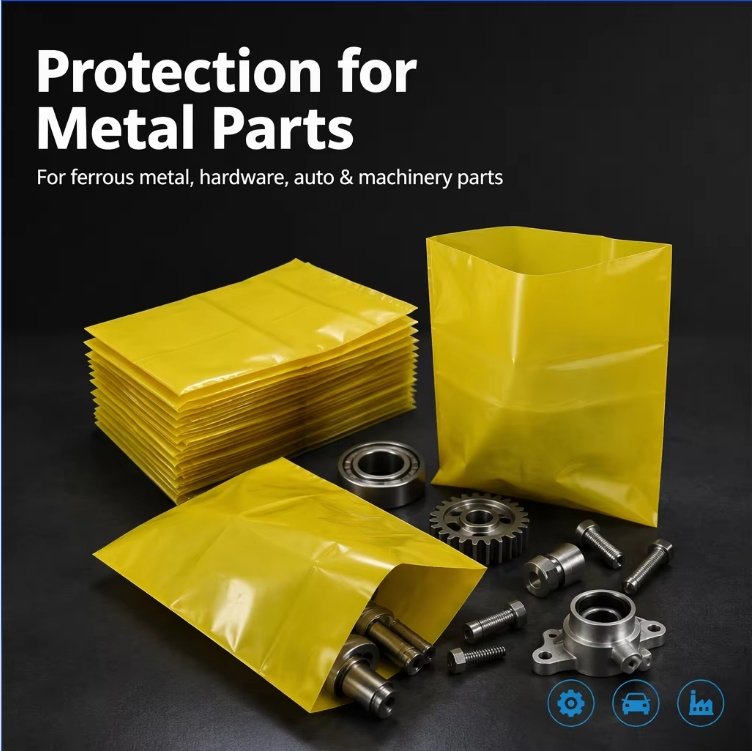
VCI Anti-Rust Bags
If you export or store metal hardware, auto spare parts, bearings, steel castings and machinery components, rust is one of your biggest headaches. Humidity during ocean shipping, temperature fluctuations in warehouses and condensed moisture can quickly ruin high-value metal goods before they reach your customers. Traditional anti-rust methods such as anti-rust oil, desiccants and grease are messy, time-consuming and hard to clean. This is where VCI anti-rust bags become a smarter industrial packaging solution.
What Is a VCI Bag?
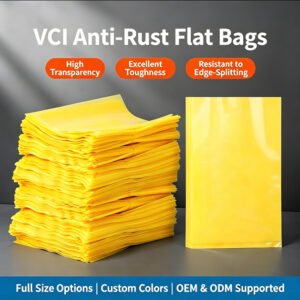
VCI stands for Vapor Corrosion Inhibitor, also known as Volatile Corrosion Inhibitor. A VCI anti-rust bag is a polyethylene film pouch blended with specially formulated VCI chemical additives during extrusion.
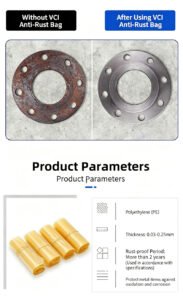
Unlike ordinary plastic bags that only block dust, VCI film slowly releases invisible, harmless anti-corrosion vapor once sealed inside an enclosed space. The vapor molecules settle evenly on the surface of ferrous metal and form a thin, invisible protective molecular layer. This barrier isolates the metal from oxygen, moisture and corrosive gases, stopping electrochemical rust formation without painting, greasing or oiling the parts.
Standard VCI bags are mainly designed for ferrous metals including iron, carbon steel and alloy steel. Custom blended VCI formulas are available to protect non-ferrous metals like copper, brass and aluminum upon request.
How Does VCI Anti-Rust Technology Work?
The anti-rust principle of VCI packaging relies on vapor migration:
- After metal workpieces are placed inside and the bag is tightly sealed, VCI additives inside the film start to release anti-corrosion vapors.
- The vapor fills every corner of the sealed bag, even reaching gaps, threaded holes and hidden crevices that desiccants cannot touch.
- Polar VCI molecules adhere to the metal surface and build a continuous protective film.
- This film suppresses the oxidation reaction, preventing water and air from triggering rust.
- When you open the bag and take out the metal parts, the VCI layer volatilizes naturally. No sticky oil residue remains, so the parts can go straight to assembly.
This non-contact rust protection makes VCI packaging extremely popular for bulk industrial shipments.

Core Advantages of VCI Anti-Rust Bags
1. Oil-Free & Clean Packaging
There is no need to apply anti-rust grease or oil to components. Workers save time on degreasing and cleaning before assembly. It reduces chemical waste and keeps your production workshop tidy.
2. 360-Degree Full Coverage Protection
Desiccants only absorb free water inside the package. VCI vapor penetrates tiny gaps and complex geometries, offering all-round rust protection for intricate stamped parts, gears and threaded fasteners.
3. Flexible Customization
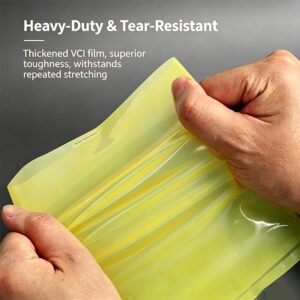
As a professional packaging manufacturer, we produce VCI bags in many styles: flat open bags, square bottom bags, drawstring bags and gusseted bags. You can customize dimensions, film thickness, printing, logo and warning marks according to your product sizes and branding needs. Our thickened heavy-duty VCI film delivers extra tear resistance for long-distance export transport.
4. Easy Operation
Just put dry and clean metal parts inside, squeeze out excess air and heat-seal the opening. No special equipment or complicated training is required for your packing team.
5. Cost-Effective for Long-Term Storage & Export
For sea freight and overseas shipments that take weeks or months, properly sealed VCI bags can offer reliable rust protection. They also work perfectly for long-term warehouse inventory storage. Compared with expensive vacuum packaging and rust-proof coating processes, VCI bags greatly cut down overall packaging labor and material costs.
Common Applications of VCI Bags
VCI anti-rust packaging is widely adopted across global heavy industries:
- Automotive industry: Engine parts, brake accessories, bolts, stamped auto components
- Hardware & fasteners: Screws, nuts, springs, cast iron fittings, cutting tools
- Machinery industry: Bearings, gear assemblies, mold parts, steel workpieces
- Metal fabrication: Stamped steel parts, welded components, sheet metal blanks
- Export logistics: Sea and air shipment packaging for metal goods to prevent salt-fog corrosion
- Electrical hardware: Metal connectors, steel frames and conductive iron fittings
How to Choose the Right VCI Bag
If you plan to order VCI bags for your business, keep these key points in mind:
- Confirm your metal type: Select standard VCI for steel and iron; specify mixed formula if you need to protect copper, aluminum or mixed metal assemblies.
- Pick suitable thickness: Thin VCI film works for lightweight small hardware; choose extra thick VCI film for heavy, sharp metal parts to avoid punctures.
- Match bag style: Flat bags for simple parts; gusseted or square-bottom bags for bulk loose components.
- Check printing demands: We can print anti-rust reminders, company logos and specification information on the film.
- Control the sealed environment: Make sure metal parts are dry and free of sweat, cutting fluid or surface contaminants before packing.
Important Storage & Usage Tips
Even premium VCI bags will lose performance if handled incorrectly. Follow these rules to maximize anti-rust life:
- Keep unused VCI bags sealed in their original packaging. Store them in a cool, dry place away from direct sunlight and high heat.
- Do not expose unused VCI film to open air for extended periods, as the active VCI vapor will dissipate.
- Always pack dry, clean metal items. Wet or contaminated metal cannot be fully protected even with high-quality VCI bags.
- Ensure complete heat sealing after packing. Any leak will let humid air enter and weaken the anti-rust effect.
- The shelf life of properly stored unopened VCI bags is around 24 months.
Frequently Asked Questions
Q: Are VCI bags reusable? A: It is not recommended for repeated use. Once opened, the active VCI additive gradually escapes, and its anti-rust capacity declines.
Q: Can VCI bags replace desiccants completely? A: In most cases, VCI bags alone work well. For extra humid sea freight or high-salt environments, many buyers use VCI bags together with desiccants for double protection.
Q: Are VCI vapors safe? A: Our food-contact grade and industrial VCI formulations are non-toxic under normal use. They do not leave sticky residue on metal surfaces.
